

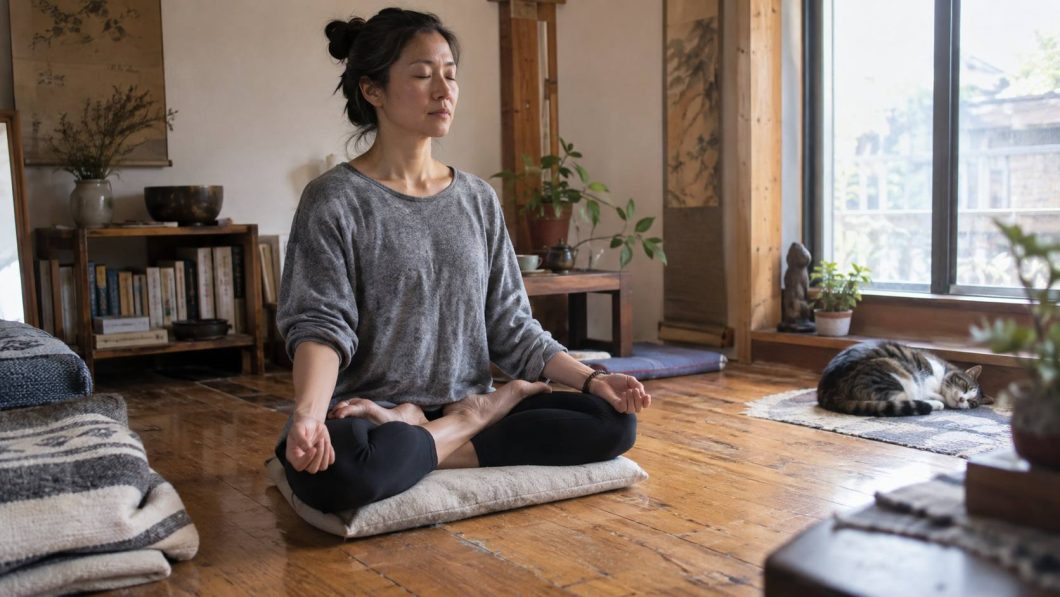
Why do practitioners sit in full lotus? Traditional teachings answer in terms of channels and inner energy. In modern language, the posture is a carefully designed way to make the body stable, upright, quiet, and easier to observe.
The five images are really five promised benefits. Upright like a sword gives the body a sense of length and makes breathing feel less collapsed. An iron hook at the neck helps the head balance over the spine instead of pulling the shoulders and throat into strain. A square grid in the legs creates a broad, steady base when the hips can do the rotation. A chain around the body quiets the urge to fidget, so attention is not repeatedly pulled outward. A balanced gong at the center gives an even distribution of weight and a clearer sense of inner balance.
There is another traditional explanation. Once the legs are folded and held together, the lower body becomes a compact “pressure plate”; practitioners describe warmth and qi-blood gathering toward the trunk and upper body. The old phrase is simple: where flow is open, there is less room for illness. In this traditional view, the upward movement of blood and qi nourishes the organs and helps the body’s inner pathways remain clear. The practical benefit is steadiness: fewer movements, easier breathing, and a quieter field in which to notice the mind.
Full lotus is also optional. The rotation should come from the hips. If the hips are not ready, forcing the feet onto the thighs can twist the knees. Sharp pain, pinching, burning, or persistent numbness means release the pose. Half lotus, an ordinary cross-legged seat, kneeling, or a chair can support the same meditation.
Begin with ten comfortable minutes. Elevate the hips if the knees sit high, relax the jaw, keep the breath natural, and let the spine rise without stiffness. The best posture is not the most impressive one; it is the one that lets you remain steady, safe, and awake.